

Video Podcast Studios in Tel Aviv: What to Look for Before You Book
Most studios in Tel Aviv will rent you a room, a camera and a microphone, and leave you to figure out the rest. A few will actually help you walk out with something you can use. The difference has nothing to do with how nice the space looks in photos — it comes down to whether anyone there is responsible for the result.
This guide is about that difference: what separates a video podcast studio in Tel Aviv that hands you equipment from one that hands you finished content — and what to check for before you book.
First: what kind of session do you actually need?
Not all studio sessions are the same, and not all studios are equipped for all types. Before you start comparing options, be clear about what you need.
Are you recording a podcast episode with a guest? Hosting a live webinar? Appearing as a guest on someone else's show via Riverside or Zoom? Recording a leadership interview for your company? Each of these has different technical requirements, and a studio that handles one well may not be set up for another.
The clearer you are about your format before you call, the easier it is to evaluate whether a studio can actually deliver what you need.
What to look for in a video podcast studio
Multiple designed setups
A studio with one setup gives you one look. A studio with multiple designed setups gives you a choice — and that choice matters more than most people realise before they have tried both options.
Different setups work for different content. A more intimate, close framing suits a personal interview or a family conversation. A wider setup with more visual depth suits a panel discussion or a show with a defined visual identity. A neutral, clean background suits a corporate interview that will sit on a company website alongside other branded content.
At M10 Studio in Tel Aviv, multiple setups are available in the same space. You are not choosing a studio. You are choosing the right environment for the specific content you are making.
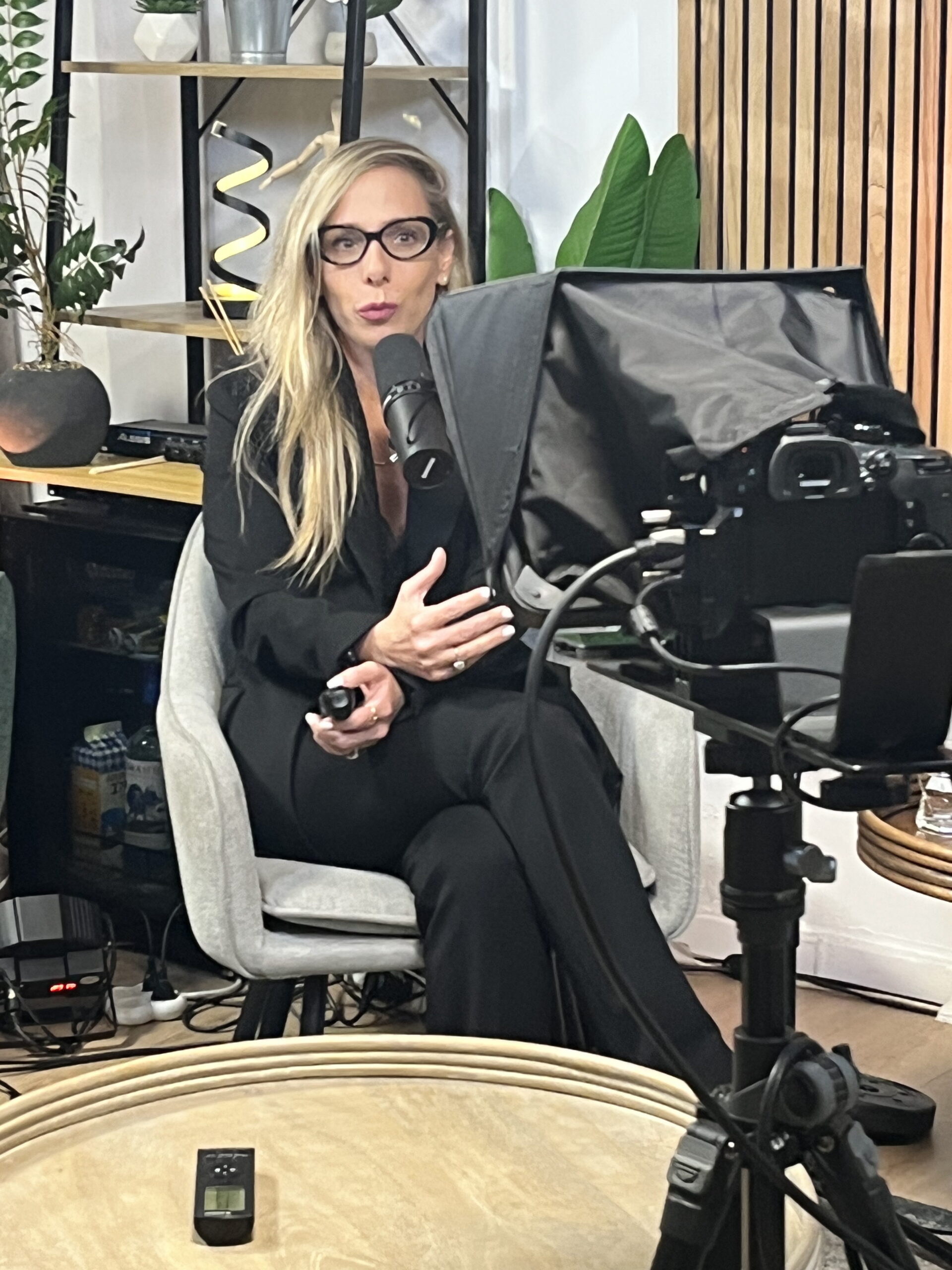
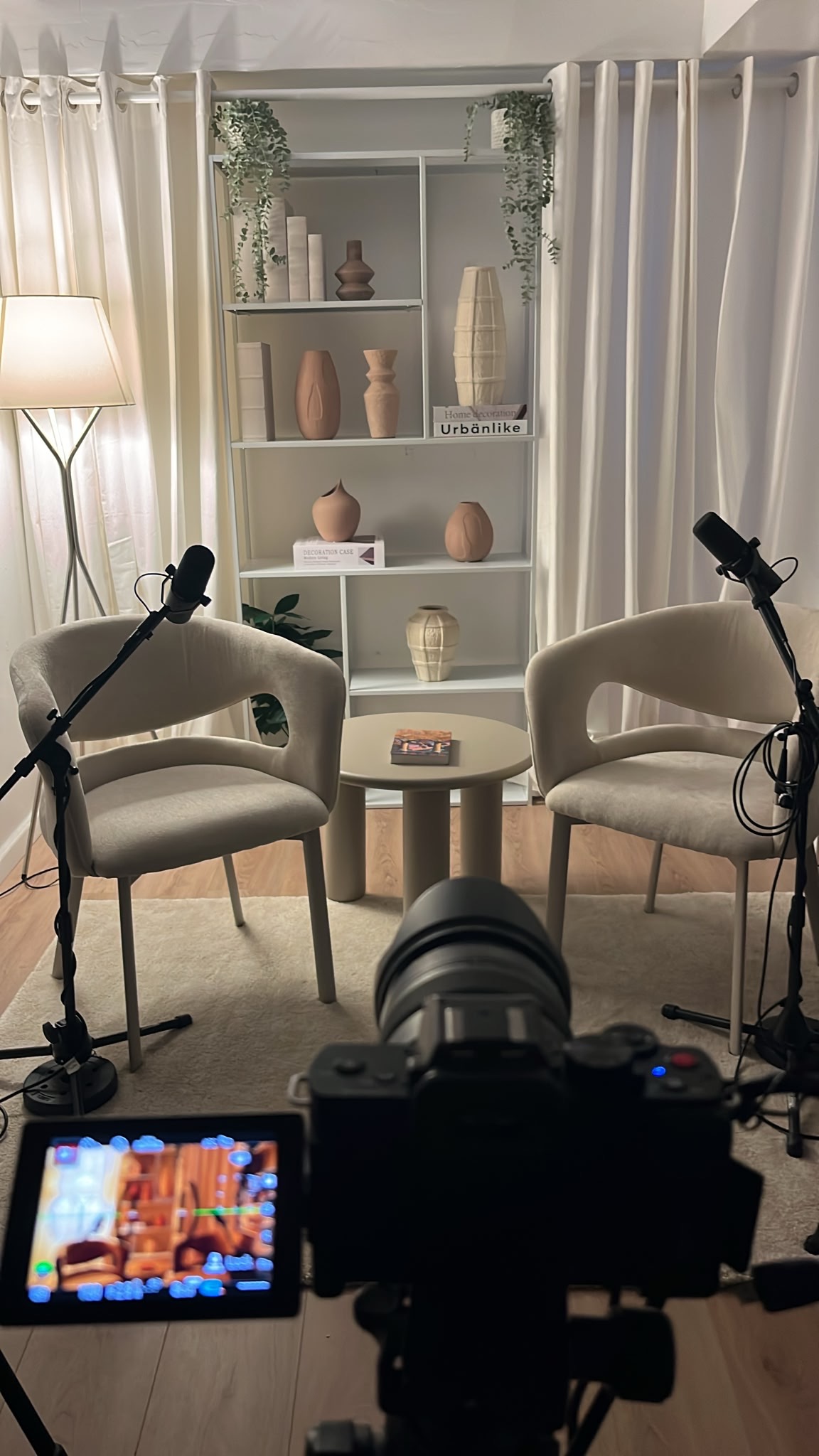
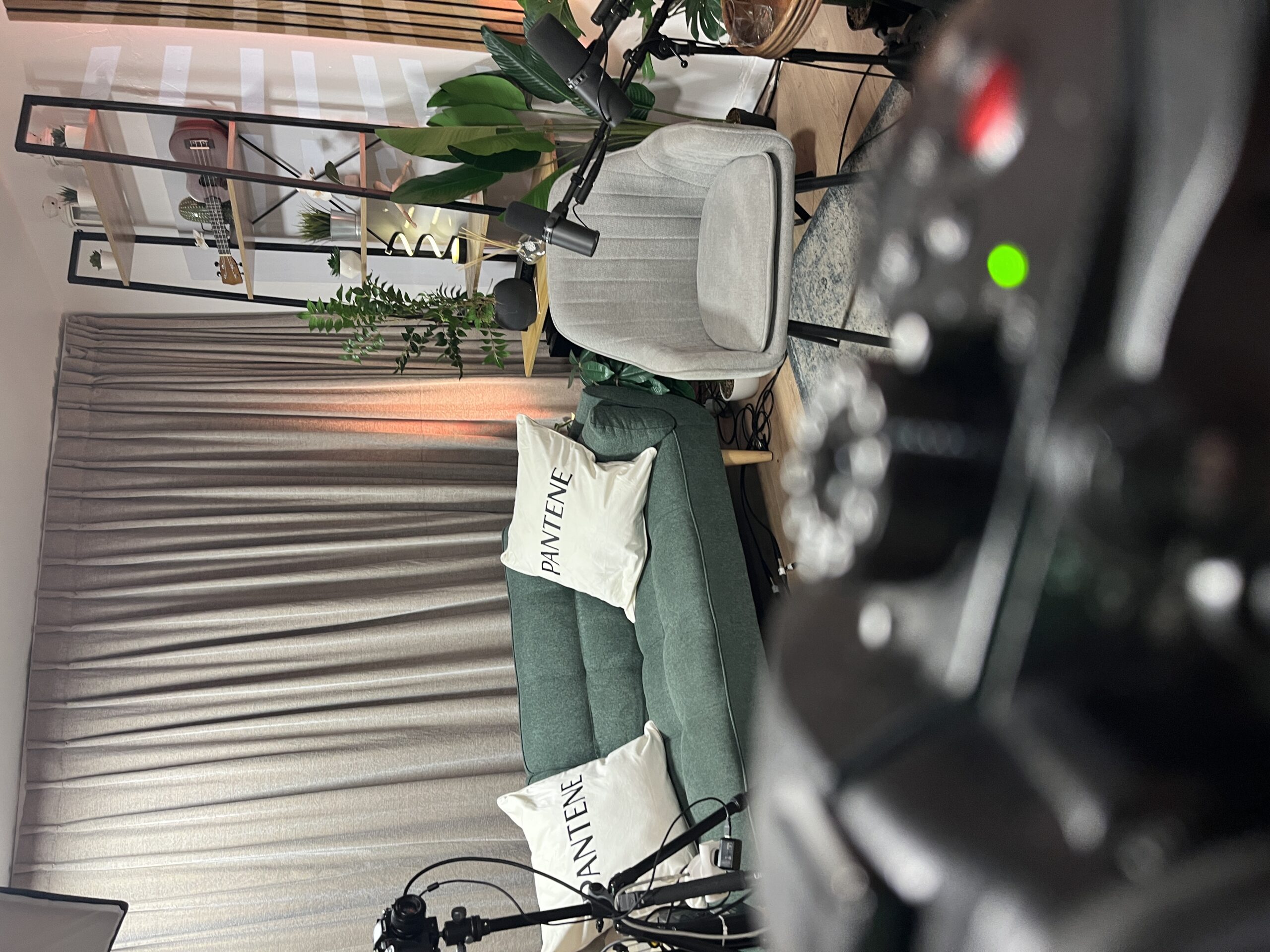

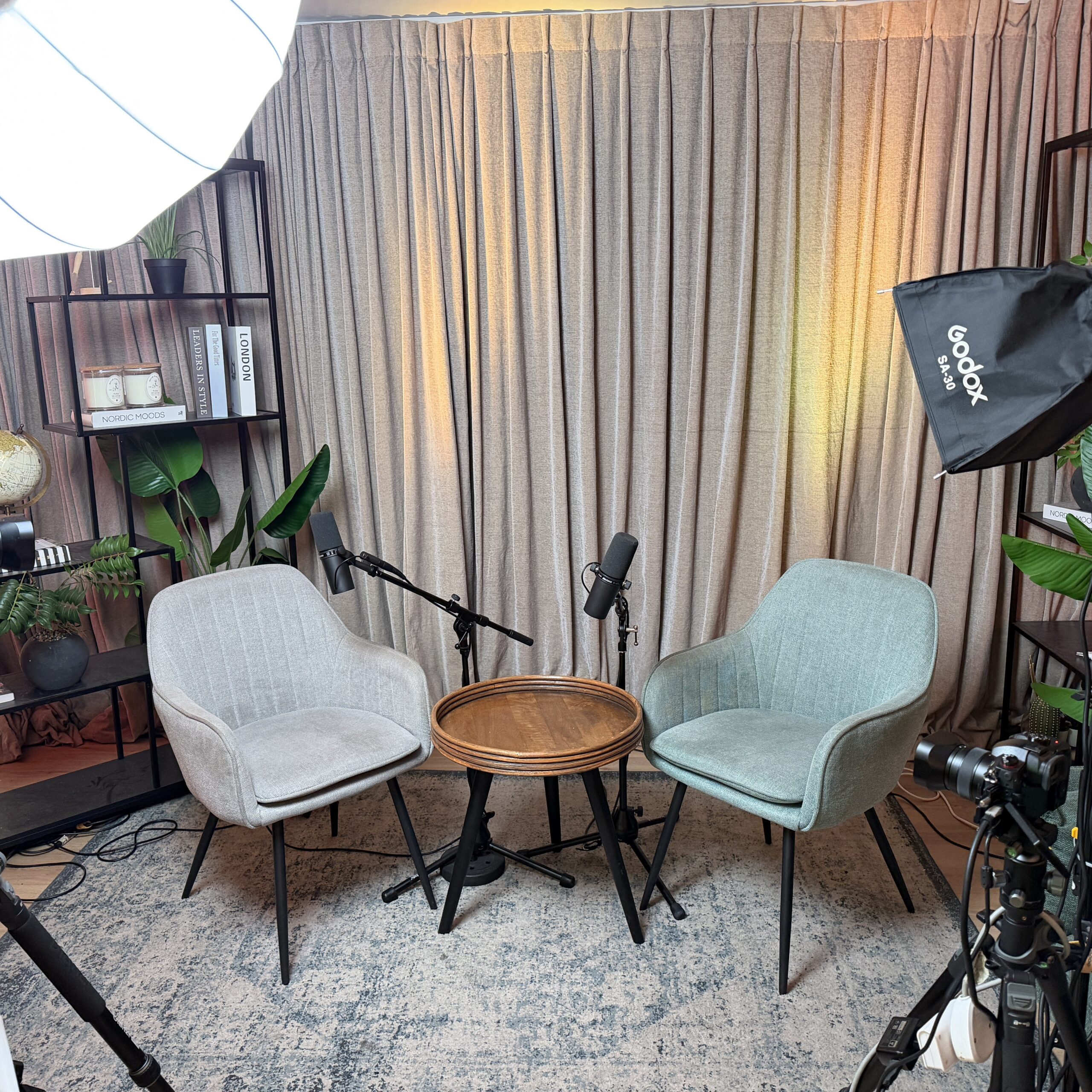
See the full range of studio setups for more examples.
Audio quality — the thing that kills content
Video problems are visible. Audio problems are felt. A viewer will forgive average video quality if the audio is clean. They will not forgive bad audio, no matter how good the video looks.
The things that create bad audio in a studio setting are usually: inadequate acoustic treatment, poor microphone placement, background noise from air conditioning or street traffic, and equipment that is technically functional but not matched to the voice of the person recording.
When you visit or inquire about a studio, ask specifically about acoustic treatment and microphone setup. Ask whether the engineer adjusts the microphone for each session or uses the same settings for everyone. A studio that takes audio seriously will have good answers to these questions. One that does not will tell you the microphone is very good and change the subject.
Technical support during the session
This is underestimated until the moment you need it. Recording your own content in a studio you have booked as a room is a different experience from recording with someone there who knows what they are doing.
A dedicated technical operator means that if something goes wrong — a level that needs adjusting, a platform connection that drops, a lighting change mid-session — it gets handled without interrupting the conversation. You stay focused on what you are saying. Someone else makes sure it is being captured correctly.
For live webinars and streaming sessions, this is not optional. Managing a live broadcast while presenting is genuinely difficult, and the quality of the session shows the difference.
English-language capability
If you are recording in English — whether as a guest on an international podcast, for a company with an English-speaking audience or as part of content aimed at international markets — the studio team needs to be able to work with you in English.
This means more than just being able to communicate. It means an interviewer who can guide a conversation in English naturally, technical staff who understand the specific platforms and workflows used for English-language content, and a team that understands the context of what you are producing.
Most studios in Tel Aviv are Hebrew-first. M10 Studio runs English sessions as a core part of what it does — not as an accommodation.
Full production support including editing
Some studios rent you the room and equipment and leave the rest to you. Others offer a complete service from session to delivery — recorded, edited, formatted for the platforms you are publishing on.
If you know what you want to do with the content and have a production pipeline in place, room rental may be enough. If you want to arrive, record and receive finished content without managing the production yourself, look for a studio that offers full post-production as part of its service.
At M10 Studio, the full package includes editing and delivery — short-form clips, full episodes, or both, depending on what you need. The session is the beginning of the process, not the end of it.
A studio that only rents you a room is a room. A studio that supports the whole process is a production partner. Decide which one you need before you book.
The checklist: what to ask before you book
Ask the studio:
- How many people can join the session on site?
- Do you have multiple setups or one fixed background?
- Is there a technical operator present during the session?
- Can you connect to Zoom, Riverside, Teams and YouTube Live?
- Do you offer editing and post-production, or only room rental?
- Do you have an English-speaking interviewer available?
- What is included in the base price and what is extra?
- Can I see examples of content recorded here?
What a premium studio experience actually feels like
There is a version of a studio session where you spend the first twenty minutes troubleshooting, the next twenty minutes feeling self-conscious about how you look and sound, and the last twenty minutes trying to remember what you actually wanted to say.
And there is a version where you arrive, someone has set everything up, you do a quick check, and then you have a conversation that feels natural because everything technical has been taken care of. The difference between these two experiences is not the equipment. It is the preparation, the support and the environment.
Premium does not mean expensive for its own sake. It means that when you leave the session, you have what you came for — and it is good enough to use.
On-location as an alternative
Some content works better when it is filmed where the story lives — in your office, at your facility, in the environment that is relevant to what you do. For this kind of content, a studio that also offers on-location production gives you the option without requiring you to find a separate production company.
M10 Studio offers on-location production across the Tel Aviv area with full equipment — cameras, sound and lighting. The same quality standard, in your space.
Location matters more than people think
A studio in a difficult-to-reach location adds friction to every session. Parking stress, traffic stress, arriving late and flustered — all of it affects the quality of what you record.
M10 Studio is at Marmorek 10 in central Tel Aviv, directly opposite Habima Square. Parking is available nearby. It is accessible from anywhere in the city and from most of the surrounding area without significant difficulty. This is a small thing until it is not.
Looking for a video podcast studio in Tel Aviv?
Tell us what you are planning and we will help you figure out the right setup, format and support level.
Talk to us on WhatsApp